Common Platforming Mistakes (and How to Fix Them)
Most failed runs in jumping games come from a handful of repeatable habits rather than bad luck: jumping too early out of nerves, spending a double jump immediately, over-steering in the air, staring at your own character, and chasing pickups off the safe path. Each one has a clear cause and a simple fix. Find the mistakes below that sound familiar, then practice one fix at a time in the suggested game.
Timing mistakes
Mistake 1: Panic jumping
What happens: an obstacle appears and you jump immediately, landing on it or just in front of it.
Why: seeing a threat makes pressing feel urgent, but most obstacles arrive later than your instinct says.
Fix: learn the distance at which a jump clears the obstacle, then wait for it. In Jump Rush, hazards slide in from both left and right, and a wasted jump (one that clears nothing) resets your combo multiplier. That rule makes panic jumping visible: every nervous hop costs you points, so it is a good place to train patience.
Mistake 2: Reacting instead of anticipating
What happens: you are consistently a fraction late, especially as speed increases.
Why: you are responding to what just happened instead of what is about to happen.
Fix: look further ahead. In runners that speed up, move your gaze toward the edge where obstacles enter. The earlier you see them, the more your jump becomes a planned action instead of a reflex. Why timing matters in jumping games explains this in more detail.
Mid-air mistakes
Mistake 3: Using the double jump right away
What happens: you tap twice in quick succession, then realize you are short or long with no way to correct.
Why: the second jump feels like part of the first.
Fix: treat the second jump as a correction you earn by watching. In Double Jump Challenge, two dots show how many jumps you have left, so glance at them before spending the last one. Waiting until you can see where the first jump will land lets you use the second only when it is needed.
Mistake 4: Over-steering
What happens: you swing past the platform, correct back, and miss the other side.
Why: late, full-strength steering overshoots, and the correction overshoots too.
Fix: steer early and in short taps. A small input at the start of a jump does the same job as a big one at the end with far less risk. Our precision jumping tips cover this and other landing habits.
Mistake 5: Ignoring momentum
What happens: jumps fall short in a game where running speed matters.
Why: you jump from a standstill out of caution.
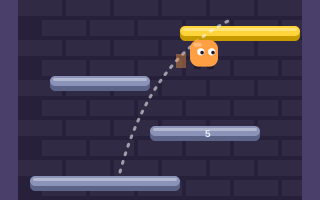
Fix: in Tower Jumper the faster you run, the higher you jump, and you can bounce off the side walls. Build speed along the floor first. Caution that kills momentum is actually the risky choice there, especially once the tower begins scrolling upward on its own.
Diagnose before you fix: after each failed run, name the cause in a few words, like "jumped early" or "over-steered." After five runs, the most common answer is the one habit worth working on.
Attention mistakes
Mistake 6: Watching your own character
What happens: hazards seem to appear out of nowhere.
Why: your eyes are fixed on the character, which you already control, instead of the path ahead.
Fix: keep the character in the edge of your vision and look at where you will be next. In climbers, that means the upper part of the screen.
Mistake 7: Ignoring on-screen signals
What happens: you get pushed off a platform or caught by something that was announced.
Why: indicators feel like decoration until you learn to read them.
Fix: learn each game's signals. Sky Jump shows a WIND indicator with the direction of gusts; Gravity Jumper shades its low-gravity zones purple so you know flips will be slower; Lava Jump shows a survival timer while the lava accelerates. These cues are there to help you plan.
Risk mistakes
Mistake 8: Chasing every pickup
What happens: a detour for a star, orb or coin ends the run.
Why: the bonus is visible and tempting; the risk is not.
Fix: collect pickups that sit on or near your planned path. Skip the rest, especially late in a run when speed is high.
Mistake 9: Stalling when the hazard is chasing you
What happens: you pause to line up the perfect jump and the rising hazard catches you.
Why: care is usually good, but some games punish waiting.
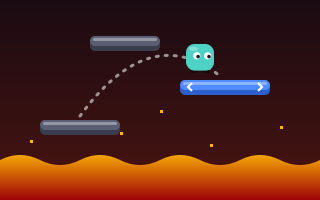
Fix: in Lava Jump, lava rises from below and gradually accelerates, so height is safety. Take the reasonable jump now rather than the ideal jump too late. The same applies in Wall Jump, where the screen scrolls upward and falling behind the bottom ends the run.
Mistake 10: Trusting unstable platforms
What happens: the platform you relied on is gone.
Why: you treat every platform the same.
Fix: learn what each color means. In Endless Jumper, orange crumbling platforms break after one bounce and blue platforms move horizontally, while green ones are normal. Always have your next landing chosen before you touch an orange platform.
Why the same mistakes keep coming back
If you recognized several habits above, that is normal. They tend to come back for a few predictable reasons, and knowing them makes the fixes stick.
- Speed exposes old habits. A habit you corrected in the calm opening of a run often returns once the game speeds up. Games like Jump Over, Double Jump Challenge and Jump Rush all get faster over time, so practice your fix late in runs as well as early.
- A new game resets your instincts. Timing learned in one game does not transfer perfectly. Moving from a normal-gravity section to a purple low-gravity zone in Gravity Jumper, for example, needs earlier flips, and old timing will feel wrong until you adjust.
- Frustration speeds you up. After a few quick failures, most players start pressing sooner and steering harder, which brings back panic jumps and over-steering. When you notice that, take a short break or switch to a gentler game for a few runs.
- Good runs hide bad habits. A long run can make you forget the mistake that ended the last five. Keep noting the cause of each failure, even on your best days.
A simple practice plan
- Play five runs of any game and note what ended each one.
- Pick the most common cause from the list above.
- Spend the next session on that fix only, even if your scores drop at first.
- Move on once the mistake stops appearing in your notes.
If you are just getting started, the beginner's guide to jumping games recommends gentle games to practice in, and how to avoid obstacles in jumping games focuses on spikes, blocks and drones. You can also browse the full obstacle jumping games category.
Key takeaways
- Panic jumps and late reactions are both fixed by looking further ahead and waiting for the right distance.
- Hold the double jump back as a correction, and steer early in small taps.
- Read each game's signals: platform colors, wind, purple zones and timers.
- Skip detours for pickups, but do not stall when a hazard is chasing you.
- Track what ends your runs and fix one habit at a time.