How to Avoid Obstacles in Jumping Games
Avoiding obstacles in jumping games comes down to identifying what kind of obstacle is ahead and matching it with the right response: a longer jump for wide blocks, a smaller hop for anything overhead, patience for moving hazards and a steady pace for anything chasing you. Most failures happen not because a hazard is impossible but because it was treated like a different type. This guide is organized as a playbook, one obstacle type at a time, with the counter for each drawn from the obstacle games on Jumping Arcade.
Classify before you jump
Before you think about when to press, spend a split second identifying what you are looking at. Nearly every obstacle in the genre fits one of a few groups:
- Ground blocks that you jump over.
- Overhead hazards that you stay under.
- Moving hazards that you time around.
- Gaps where the danger is the missing floor, not an object.
- Chasing hazards that follow you, such as rising lava or a scrolling screen edge.
Each group asks a different question. Ground blocks ask "how far and how high?", overhead hazards ask "how low?", moving hazards ask "when?", and chasing hazards ask "how fast?" Getting the question right is most of the battle.
Ground obstacles: height and width
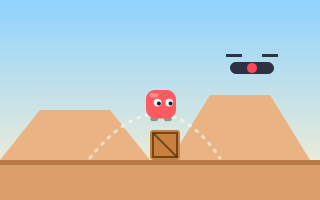
Ground obstacles look simple, but their size matters. In Jump Over, your character runs automatically and ground obstacles come in varying heights and widths. A short, narrow block can be cleared with a quick tap. A tall or wide one needs a held jump for full height.
Wide obstacles need an earlier takeoff
The most common mistake with wide obstacles is jumping at the same point you would for a narrow one. Your arc peaks too early and you come down on the far end. For a wide block, take off earlier so the top of your arc sits over the middle of the obstacle, not its front edge.
Tall obstacles need commitment
With tall obstacles, a half-hearted press is the danger. If a game uses variable jump height, as Jump Over does, releasing the button too early cuts your jump short. Hold through the rise and let go only once you are clearly above the obstacle.
Overhead hazards: when less is more
Overhead hazards punish over-jumping. Jump Over's hovering drones are placed so that a full jump hits them but a short hop passes underneath. The fix is to make your tap as short as possible and to decide on the hop before you reach the drone, not while you are already rising toward it.
In Wall Jump, floating bars between the walls act as overhead and mid-air hazards on your path from one wall to the other. You cannot change the shape of your leap, so the answer is timing: wait on the wall, sliding slowly, until the path across is clear.
Moving hazards: watch one cycle first
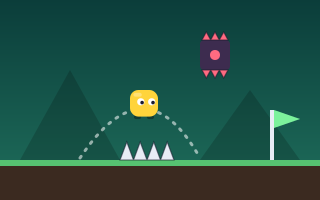
Moving hazards follow patterns. Spike Jumper places static spikes alongside moving spike blocks in its side-scrolling sections. Static spikes are a positioning problem; moving ones are a timing problem.
- Stop short of the hazard in a safe spot, if the game allows you to control your pace.
- Watch one full cycle of its movement.
- Pick the moment in that cycle when the path is open for longest.
- Move on that moment, not a beat after it.
Spike Jumper also gives you checkpoint flags and three lives, respawning you at the last checkpoint. That makes it reasonable to spend a life learning a tricky moving section, as long as you learn something from it. Reaching a checkpoint before attempting something risky is safer than attempting it right after one.
Hazards from more than one direction
Some games stop you from only watching ahead. In Jump Rush, your character stays in the center and hazards slide in along the ground from both the left and the right at increasing speed. Coins in the air add bonus points.
The key habit is splitting your attention evenly. Players tend to favor one side and get caught from the other. Try keeping your eyes on your character's position and using your peripheral vision for both edges. When hazards from both sides will arrive at nearly the same moment, a single well-timed jump can clear both. When they are staggered, you need two jumps. Only jump when something is actually arriving, because a wasted jump resets your combo multiplier.
Gaps, floors and ceilings
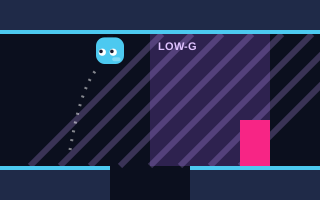
Gaps are obstacles made of absence, and they are easy to underestimate because there is nothing to look at. In Gravity Jumper, the corridor has gaps in both the floor and the ceiling, plus block obstacles. One press flips gravity, so avoiding a floor gap means flipping to the ceiling before you reach it, and then checking the ceiling ahead for its own gap.
The trick is to read both surfaces at once and plan which one you will be on for each stretch. In the purple-shaded low-gravity zones, flips are slower and floatier, so start your flip earlier than you would in normal gravity.
In Double Jump Challenge, gaps sit between floating platforms at different heights, and some platforms carry spikes. A gap followed by a spiked platform effectively becomes one long obstacle, so plan the jump to carry you past both.
Chasing hazards: lava and scrolling edges
Chasing hazards are different from everything above because you cannot jump over them. You can only stay ahead. In Lava Jump, lava rises from below and gradually accelerates while you climb, and some platforms move. The survival timer on screen gives you a sense of how long you have been going and adds to your score.
Against a chasing hazard, the goal is steady progress rather than bursts. A run of safe, quick jumps beats one ambitious leap that fails. When you have a comfortable gap between you and the lava, use it to make careful choices. When the gap closes, take the most reliable upward option available, even if it is not the fastest. The same logic applies to games where the screen scrolls upward on its own.
A simple practice plan
Instead of playing whole runs, pick one obstacle type per session and focus on it: drones in Jump Over, two-sided timing in Jump Rush, or floor-and-ceiling reading in Gravity Jumper. You will reach that obstacle many times over several runs, and a narrow focus shows progress faster.
For more on landing exactly where you intend, see precision jumping tips. If you keep failing at obstacles you understand, common platforming mistakes may reveal the habit behind it. More games built around hazards are in the obstacle jumping games category.
Key takeaways
- Identify the obstacle type first: ground block, overhead, moving, gap or chasing hazard.
- Take off earlier for wide ground obstacles and commit to the full press for tall ones.
- Use the smallest possible hop under overhead hazards like drones.
- Watch one full cycle of a moving hazard before committing.
- Split attention evenly when hazards come from more than one side.
- Against rising lava or scrolling edges, steady safe progress beats risky leaps.