How to Play Platform Jumping Games
To play a platform jumping game well, you need to do three things on every jump: identify what kind of platform you are aiming for, choose a takeoff point that gives you a safe landing, and steer in mid-air so you arrive near the middle of it. Everything else, from combos to high scores, builds on that loop. This guide walks through each step with examples from the platform games on Jumping Arcade, then covers how to plan routes and recover when a landing goes wrong.
Step 1: Spend your first run learning the controls
Before chasing a score, use one run purely to feel how your character moves. Platform games differ more than they look. Some bounce you automatically, some make you press Jump, and some let you build speed before takeoff.
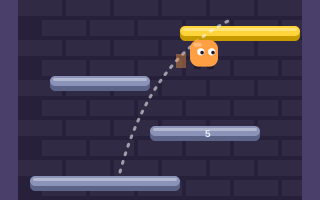
- In Endless Jumper, your character bounces on its own. You only steer left and right, and walking off one side of the screen wraps you to the other.
- In Sky Jump, you press Jump yourself and can jump a second time in mid-air.
- In Tower Jumper, horizontal speed matters: the faster you run, the higher you jump.
Spend that first run testing the edges. How far does one jump carry you sideways? How quickly can you reverse direction in the air? Does the screen wrap or does it have walls? Ten seconds of deliberate experimenting saves many confused failures later. If you are unsure which keys do what, our guide to jumping game controls covers the common layouts.
Step 2: Identify the platform before you commit
Platform games communicate through color and motion. Before every jump, glance at the target and ask what it will do when you land on it. Endless Jumper is a good example because it uses four clear types:
| Platform | Behavior | How to treat it |
|---|---|---|
| Green | Normal and stable | Your safe default; use it to reset your position |
| Blue | Moves horizontally | Aim where it will be, not where it is |
| Orange | Crumbles after one bounce | A one-use stepping stone; plan your next target before landing |
| Yellow spring pad | Gives a super bounce | A big height gain, but look above you so you can steer on the way up |
Other games use different language for the same idea. Sky Jump's cloud platforms drift sideways, so they behave like moving platforms. Some platforms in Lava Jump move as well. Once you recognize "stable," "moving," "one-use" and "launch" as categories, you can read almost any platform game quickly.
Step 3: Choose your takeoff point
Most missed landings are decided before you leave the ground. Where you take off from sets up how much correction you will need in the air.
When the game bounces you automatically
In auto-bounce games you cannot choose when to jump, but you can choose where you are standing when the bounce happens. In Endless Jumper, drift toward the side of the platform that faces your next target while you are still on it. You leave the platform already moving in the right direction.
When speed changes your jump
In Tower Jumper, a standing jump is short and low. If the next floor is far above you, run along the floor first to build horizontal momentum, then jump. Use the side walls, too: you can bounce off them, which lets you keep speed on a narrow floor instead of stopping at the edge.
Step 4: Steer in the air and aim for the middle
Once you are airborne, your job is to arrive near the center of the target. Landing on the edge works, but it leaves no margin if the platform moves or if your next jump needs a running start.
Make small corrections rather than large ones. If you hold a direction key for the whole jump, you tend to overshoot and then have to swing back. Short taps give you finer control. Wind makes this more important in Sky Jump: when the on-screen WIND indicator shows a gust, lean slightly against it so the push carries you onto the cloud rather than past it.
In games with a double jump, the second jump is also a steering tool. If you notice mid-flight that you will land short in Sky Jump, a second jump gives you extra height and time to correct. Our guide to double jump mechanics goes deeper on when to spend it.
Step 5: Plan a route, not just the next jump
After a few runs, start looking two or three platforms ahead. Beginners treat each jump as a separate problem. Stronger players see a path.
- Scan upward or forward for the next stable platform. That is your anchor.
- Work backward from the anchor to see which intermediate platforms get you there.
- Prefer routes with fallback options. A route with a green platform below it is safer than one that crosses only crumbling orange ones.
- Take bonuses only when they fit the route. Stars in Sky Jump add points, but a detour into empty sky to grab one can cost you the whole run.
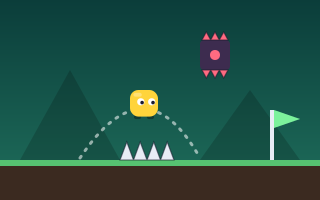
In Spike Jumper, route planning also means timing. Moving spike blocks travel on a pattern, so watch one cycle before stepping forward. The static spikes never move, which makes them easy to plan around once you see them.
Step 6: Handle the pressure that pushes you upward
Many platform games add a force that stops you from playing slowly. Tower Jumper begins scrolling upward on its own after the first floors and gradually speeds up, so falling off the bottom ends the run. Lava Jump has lava rising from below that accelerates over time.
The instinct under pressure is to rush. Instead, keep a steady rhythm and use the time you have. If the scroll or lava is still well below you, you can afford one careful jump rather than two hurried ones. When it gets close, prioritize any upward progress over the perfect route. In Tower Jumper, jumping over several floors at once earns a combo bonus, but a single safe floor is better than a missed multi-floor leap.
Step 7: Recover from bad landings
Not every landing will be clean. What separates a long run from a short one is often what you do next.
- Landed on an edge? Step toward the center before your next jump if the game gives you time, or angle the next jump inward to compensate.
- Landed on a crumbling platform by accident? Your next bounce is your only one from there, so pick the closest reachable target rather than the ideal one.
- Lost a life in Spike Jumper? You respawn at the last checkpoint flag with your remaining lives. On your second attempt at that section, watch the hazard that caught you before moving.
- Falling with nothing below? In wrap-around games like Endless Jumper, check the far side of the screen; a platform off the opposite edge may be closer than it looks.
For a list of the habits that cause most of these situations in the first place, see common platforming mistakes. You can browse more titles in the platform jumping games category.
Key takeaways
- Use your first run to learn how the character moves: auto-bounce, manual jump, momentum or wrap-around.
- Read each platform as stable, moving, one-use or launch before you commit to it.
- Choose your takeoff point deliberately; in momentum games, build speed before jumping.
- Steer with small taps and aim for the center of the platform, leaning against wind where it applies.
- Plan two or three platforms ahead and prefer routes with a stable fallback.
- Under scrolling or rising pressure, keep a steady rhythm and value safe progress over risky combos.