What Are Jumping Arcade Games?
Jumping arcade games are short, replayable games where the jump is the main action: you time, aim or chain jumps to clear gaps, dodge hazards or climb as high as possible, and a single mistake usually ends the run. They borrow the quick-restart loop of classic coin-op arcade machines and pair it with one core verb, which is why a round can last twenty seconds and still feel complete. This guide explains what defines the genre, the main sub-types you will meet, and how to choose where to start.
The core idea: one verb, many situations
Most video games give you a toolbox of actions. Jumping arcade games deliberately narrow that toolbox. You might be able to move left and right, or you might only have a single button, but the jump carries almost all the decision-making. The design interest comes from putting that one action into changing situations: a platform that slides away, a hazard that arrives faster than the last one, a gap that is slightly wider than you expected.
Because the verb stays the same, what you learn transfers. The hop you practice on the first obstacle in Jump Over is the same hop you need on the hundredth, only at a higher speed. That consistency is what makes the genre easy to pick up and slow to master.
What makes a jumping game "arcade"
Plenty of story-driven platformers include jumping. The arcade label points to a specific structure rather than a theme. In practice, a jumping arcade game usually has most of these traits:
- Short runs. A session is measured in seconds or minutes, not hours.
- Instant restarts. When you fail, you are back in action almost immediately, with no long menus or cutscenes.
- A score to beat. Progress is expressed as height, distance, floors or points, and your personal best is the real goal.
- Rising pressure. Speed increases, platforms shrink or a hazard chases you, so a run cannot last forever.
- Readable rules. You can understand what kills you and what helps you within the first attempt.
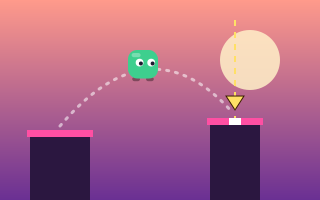
Take Perfect Jump as an example. You stand on a pillar, a power meter swings back and forth, and you press once to jump with whatever power the meter shows. Miss the next pillar and the run is over. There is nothing else to learn about the controls, yet the meter speeds up and the pillars narrow over time, so the challenge keeps climbing.
The main sub-genres at a glance
Jumping arcade games overlap a lot, and a single game often fits several labels. Still, the sub-genres describe different kinds of pressure, which helps when you are deciding what to play.
| Sub-genre | Main pressure | Example on Jumping Arcade |
|---|---|---|
| Endless | Keep climbing or running with no finish line | Endless Jumper, Bounce Up |
| Platform | Land on surfaces that move, drift or crumble | Sky Jump, Tower Jumper |
| One-button | Everything depends on when you press | Perfect Jump, Wall Jump |
| Double jump | Deciding when to spend a second mid-air jump | Double Jump Challenge, Tiny Jumper |
| Obstacle | Reading and clearing hazards in your path | Jump Over, Spike Jumper |
| High score | Multipliers and combos that reward clean play | Jump Rush, Daily Jump Challenge |
Each of these has its own category page, such as endless jumping games and obstacle jumping games, if you want to browse by style.
Auto-movement versus free movement
One useful way to split the genre is by who controls the horizontal movement. In auto-runners like Double Jump Challenge, the game scrolls for you and your only job is jumping. In free-movement games like Spike Jumper, you steer left and right as well, which gives you more control and more ways to make mistakes. Neither is harder by default; they simply test different skills.
How a typical run unfolds
Most jumping arcade runs follow a recognizable arc, even when the games look nothing alike.
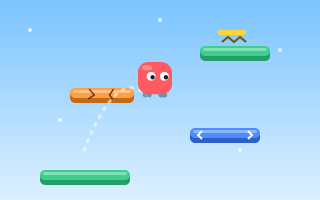
- The warm-up. The opening seconds are forgiving. In Endless Jumper, the first platforms are close together and mostly the green, stable kind.
- The ramp. New elements appear. Blue platforms start moving sideways, orange ones crumble after one bounce, and gaps widen.
- The squeeze. The game's pressure outpaces your comfort zone. This is where most runs end and where your personal best is decided.
- The restart. You try again straight away, usually with one specific thing you want to do better.
That last step matters. The genre is built around the idea that each failure teaches you something small and concrete, and the quick restart lets you apply it while it is fresh.
The skills the genre asks of you
Jumping arcade games are simple to describe, but they draw on a handful of distinct gameplay skills. Knowing which one a game emphasizes helps you understand why you are struggling with it.
Timing
Pressing at the right moment is the foundation. In Bounce Up, pressing Jump just as the ball touches a trampoline pad gives a boosted bounce rated GOOD or GREAT. The difference between the two is a matter of a split second.
Spacing and aim
Where you jump from and where you land is its own skill. Moving Platforms rewards centered landings with a bonus, so you are aiming as well as timing.
Reading ahead
Good players look at what is coming, not at their character. In Jump Rush, hazards slide in from both the left and the right, so you have to scan both sides of the screen to know when a jump will actually clear something.
Small resource decisions
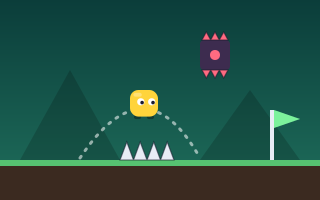
Some games give you a limited resource to spend. A double jump is the most common one, but lives and checkpoints count too. Spike Jumper gives you three lives and respawns you at the last checkpoint flag, which changes how much risk you might accept between flags.
Why the genre suits the browser
Short sessions and simple inputs make jumping games a natural fit for playing in a web browser. There is nothing to install, a single key or tap is enough for many of them, and a run fits into a spare minute. The games on Jumping Arcade are built with standard web technology and run on both desktop keyboards and touch screens, so the same game works on a laptop or a phone.
Your personal best for each game is stored locally in your browser rather than on an account, so you can come back and try to beat it without signing up for anything.
Choosing your first game
If you are new to the genre, pick a game by the kind of control you are comfortable with rather than by theme:
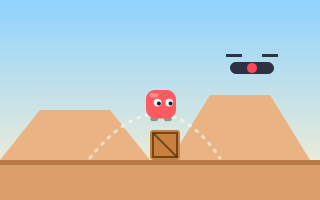
- If you want the simplest possible start, try a one-button game with a clear rhythm, such as Perfect Jump or Jump Over.
- If you like steering, Endless Jumper bounces automatically and only asks you to move left and right.
- If you want a structured challenge, Spike Jumper's checkpoints and lives give you room to learn a section before moving on.
- If you want a fair comparison with friends, the Daily Jump Challenge generates the same course for every player on the same day.
From there, our beginner's guide to jumping games walks through your first sessions in more detail, and how platform jumping games work explains the rules that sit underneath the platforms themselves. You can also browse the full list of games.
Key takeaways
- Jumping arcade games center on one core action, the jump, placed in constantly changing situations.
- The arcade structure means short runs, instant restarts, rising pressure and a score to beat.
- Sub-genres such as endless, platform, one-button, double jump, obstacle and high score describe different kinds of pressure.
- The main skills are timing, spacing, reading ahead and small resource decisions like when to use a double jump.
- Pick your first game by the control style you prefer, then improve one specific thing per run.